Phonological Awareness vs Phonics: Why Phase 1 Phonics Matters for Your Child – Week 14
Hello phonics friends!👋
Can I let you in on something?
Many parents hear the word phonics and think it starts with letters.
Flashcards.
Writing sounds.
Reading words.
But before children can confidently do any of that, something else has to happen first.
Their ears need to learn how to hear words in a new way.
That’s what today’s post is about.
When children start nursery or Reception in the UK, you might hear teachers talk about things like:
Phase 1 phonics
phonological awareness
phonics
At first those phrases can sound a bit confusing.
So today we’re going to untangle them together — in a simple, practical way — so you can feel confident about what your child is learning and how you can support them at home.
- Greetings from Grace
- What is phonological awareness?
- What is phonics?
- Why the order matters for learning to read
- Simple sound games to try at home
- Have you discovered out new parent-friendly phonics activities guide yet?
- Week 15’s Preview
- FAQs about phonological awareness and phonics
Why This Matters for Parents
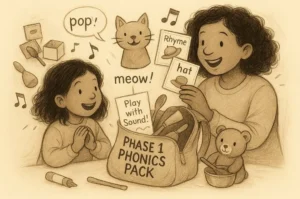
If your child is in nursery or Reception, you might have heard a teacher mention Phase 1 phonics.
And a very common parent reaction is something like:
“Should we already be practising letter sounds?”
or
“Are we doing enough phonics at home?”
The reassuring truth is this:
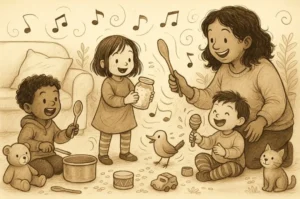
Many of the games you’re already playing with your child are exactly the activities used during Phase 1 phonics in UK classrooms.
Things like:
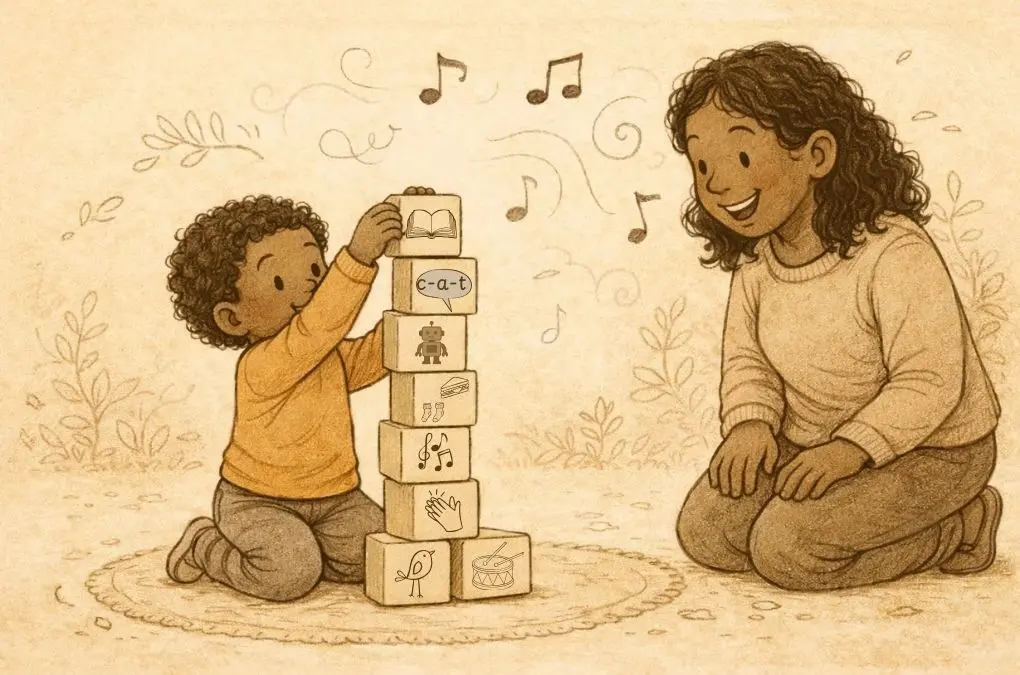
- rhyming games
- clapping syllables
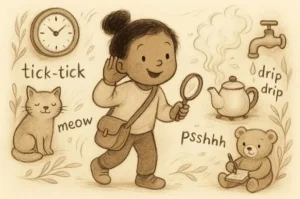
- listening walks
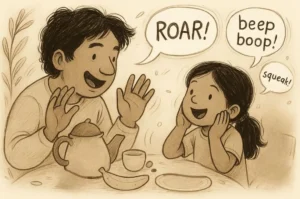
- silly sound games
- robot talk
These activities might feel simple, but they are building a very important skill called phonological awareness.
And that skill is what makes phonics easier later.
Understanding this helps you realise something important:
These sound games aren’t just fun.
They’re preparation.
In other words:
Phase 1 phonics = building phonological awareness before letters.
What Is Phonological Awareness?
Phonological awareness simply means:
Being able to hear and play with the sounds in words.
There are no letters involved yet.
It’s all about listening.
For example, when your child:
• notices that cat rhymes with hat
• claps the beats in “ba-na-na”
• laughs at silly alliteration like “busy bees”
• blends sounds in robot talk (c-a-t → cat)
These playful moments help children start to notice something important:
Words are made of sounds.
And once children understand that, learning to read becomes much easier.
What Is Phonics?
Phonics is the next step.
It’s when children begin connecting those sounds to letters.
For example:
• learning that the letter s makes the /s/ sound
• seeing the letters c-a-t and blending them into “cat”
• using letters to spell simple words
So the difference looks like this:
Phonological awareness
→ hearing and playing with sounds
Phonics
→ connecting those sounds to letters
Why This Order Helps Children
Imagine trying to solve a puzzle before you’ve seen the picture on the box.
It would feel confusing.
That’s what learning letters can feel like if children haven’t had lots of practice hearing sounds first.
When children already know how to:
• hear the sounds in words
• blend sounds together
• play with rhyme and rhythm
Then letters suddenly make sense.
Phonics feels logical instead of overwhelming.
And that confidence makes a huge difference to how children approach reading.
A Helpful Way to Think About It
A simple way to picture it is this:
Phonological awareness = ears 👂
Phonics = ears + eyes👂👀
First children learn to hear the sounds.
Then they connect those sounds to letters.
Both are important.
A Practical Way to Use This at Home
The good news is you don’t need new materials or complicated lessons.
You just need tiny sound moments during the day.
Here are three simple ways to strengthen phonological awareness.
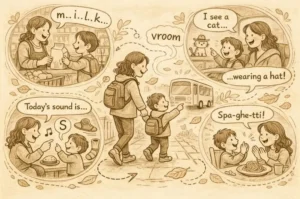
1️⃣ Robot Talk Requests
At snack time try:
“Can you pass the m-i-l-k?”
Let your child blend the sounds to guess the word.
2️⃣ Clap the Beats
Say a word together and clap the syllables.
“Spa-ghe-tti”
👏👏👏
This helps children hear how words break into parts.
3️⃣ Silly Sound Swap
Choose a word and swap the first sound.
Cat → bat
Bat → hat
Hat → mat
Children love the silliness, but it’s also helping them notice sound patterns.
If You’re Already Playing Sound Games…
You’re not “waiting to start phonics”.
You’re building the foundations that make phonics work.
And that foundation makes a big difference to how confident children feel when letters arrive.
Putting it into practice
The Sound Detective Game
Choose one everyday object.
For example: sun
Ask your child:
“What sound does sun start with?”
Then challenge them to find another word with the same sound.
Sock
Sand
Soup
You’ve just turned a simple moment into a sound awareness game.
Next Steps?
If you’re wondering what kinds of activities help children develop these early sound skills, we’ve created a simple parent-friendly guide to Phase 1 phonics activities.
Inside you’ll find easy games you can play at home with children aged 3–5 to strengthen listening and sound awareness.
👉 [Explore the Activities Guide]
Coming Up Next Week
Next week we’re exploring one of the most important early reading skills:
oral blending.
If your child sometimes struggles to blend sounds into words, don’t worry — we’ll break it down and share practical ways to help.
👉 Read next: [Week 15 – What Is Oral Blending (And Why Is It So Important Before Letter Sounds?)]
FAQs About Phonological Awareness and Phonics
What is phonological awareness in simple terms?
Phonological awareness is the ability to hear and play with the sounds in spoken words, such as rhymes, syllables, and beginning sounds.
What is the difference between phonological awareness and phonics?
Phonological awareness focuses on hearing sounds in words, while phonics teaches children to connect those sounds to written letters.
Which comes first, phonological awareness or phonics?
Phonological awareness comes first. Phase 1 phonics is the stage most UK children experience in nursery and early Reception before formal letter sound lessons begin. This is so they develop the essential listening and sound awareness skills needed before learning how letters represent those sounds.
What age do children develop phonological awareness?
Many children begin developing phonological awareness between ages 3–5 through rhymes, songs, and sound games.
Can phonological awareness be taught through play?
Yes. Activities like rhyming games, clapping syllables, and robot talk are excellent ways to build phonological awareness.
A Final Thought
Phonics doesn’t start with letters.
It starts with listening.
With rhymes.
With silly sounds.
With playful sound games.
And every time your child joins in with those moments, they’re building the skills that will eventually help them read.
You’re already helping more than you might realise.
If this post made phonics feel a little easier… Get more practical phonics tips, new free resources, and occasional workbook news and special offers sent straight to your inbox.
If you found this post helpful, feel free to share it with another parent who might find it useful too.