Phase 1 Phonics Activities
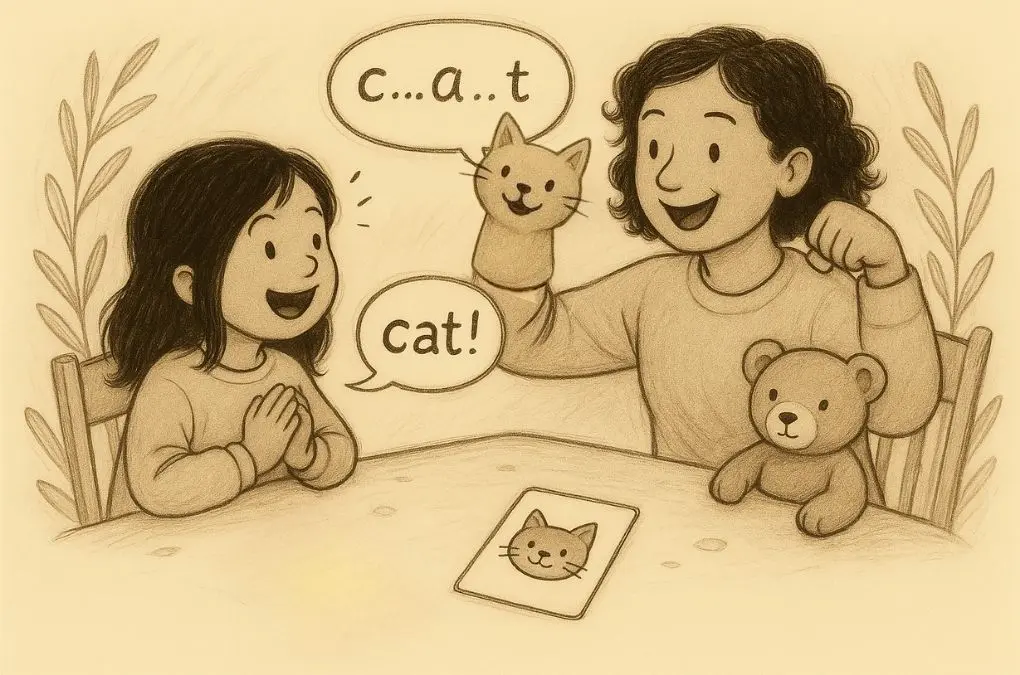
Phase 1 phonics is the first step in learning to read, but many parents aren’t sure how to start supporting it at home.
If you’ve tried searching for Phase 1 phonics activities, and ever thought:
“I wish someone would just show me what to do.”
“I need quick phonics activities I can start today.”
you’re in the right place.
Here you’ll find a guide to simple phonics activities and games for 3–5 year olds with clear instructions so you can start playing them easily at home.
Every activity on this page helps develop the listening and sound awareness skills children need before they start learning letter sounds.
Most activities take just a few minutes and use everyday objects or situations.
Children begin by noticing and playing with everyday sounds. As their listening skills grow, they start to realise that words are made up of sounds too. This is the foundation they need before connecting sounds to letters.
If you’d like free printable worksheets to support the activities, explore our Phase 1 phonics worksheets.
New to phonics? Start with our simple Start Here guide, which explains how children begin learning to read and how to support your child at home.
Environmental Sounds
Recognising everyday sounds all around us – from birds chirping to the hum of the fridge. Learn more…
1. What This Game Is
A short walk where you and your child listen carefully for sounds around you.
You can do it anywhere:
- on a walk
- in the garden
- outside your house
- in a park
2. Why This Helps Your Child Learn to Read
Reading begins with learning to hear sounds clearly.
Before children can hear sounds in words like c-a-t, they first need to notice sounds in the world around them.
Listening games build phonological awareness, one of the strongest predictors of reading success.
3. What You Need
Nothing.
Just your ears and curiosity.
4. How to Play
- Stop somewhere outside.
- Say:
“Let’s turn on our listening ears.”
- Stay quiet for 10–20 seconds.
- Ask your child:
“What sounds can you hear?”
- Take turns sharing sounds.
Common sounds children notice:
- birds
- cars
- wind
- footsteps
- dogs barking
Want a ready-to-use version of this activity?
Download the free printable worksheet to guide the game and extend the learning.
5. What You Can Say (Helpful Parent Phrases)
Children learn best when adults model listening language.
You might say:
- “I can hear a bird chirping.”
- “That sound is very quiet.”
- “That car sounds far away.”
- “That sound stopped quickly.”
6. Make It Easier
Give two choices.
Example:
“Can you hear a bird or a car?”
7. Make It Harder
Try these listening challenges.
Sound counting
“How many different sounds can we hear?”
Eyes closed listening
Close your eyes and listen carefully.
Sound direction
“Where do you think that sound is coming from?”
8. Variations to Keep It Fun
Sound Detective
Pretend you are detectives trying to find where the sound is coming from.
Different Places
Try the activity in different locations:
- park
- playground
- supermarket car park
- garden
Night Listening
Go outside in the evening and listen for:
- wind
- owls
- distant traffic
9. How Long to Play
2–5 minutes is perfect.
Short, playful listening games build skills much better than long activities.
1. What This Game Is
A fun guessing game where your child listens to a sound and tries to work out what made it.
2. What Your Child Learns
Your child practises hearing and distinguishing different sounds.
This skill is called sound discrimination.
3. Why This Helps Reading
When children learn phonics they must hear the difference between sounds like:
- b and p
- t and d
- m and n
Games like this strengthen the listening skills needed to tell sounds apart.
4. What You Need
A few everyday objects that make clear sounds, such as:
- keys
- paper
- spoon and cup
- plastic bottle
- toy car
- zip
- water being poured
5. How to Play
1️⃣ Ask your child to close their eyes or turn around.
2️⃣ Make a sound with one object.
Examples:
- shake keys
- scrunch paper
- tap a spoon on a cup
- zip up a bag
3️⃣ Ask:
“What made that sound?”
4️⃣ Show the object after they guess.
5️⃣ Take turns making mystery sounds.
Want a ready-to-use version of this activity?
Download the free printable worksheet to guide the game and extend the learning.
6. What You Can Say
Help your child think about the sound.
Try phrases like:
- “Listen carefully.”
- “That sound was loud.”
- “It was a quick sound.”
- “Shall I do the sound again?”
You might also say:
“What do you think made that sound?”
7. Make It Easier
Give two choices.
Example:
“Was it the keys or the paper?”
You can also repeat the sound several times.
8. Make It Harder
Try these challenges:
Two sounds in a row
Make two sounds.
Example:
- keys → paper
Ask:
“What two sounds did you hear?”
Sound memory
Make a sequence of sounds for your child to repeat.
9. Try This Next Time
Sound Hunt Version
Walk around the house making sounds with objects.
Kitchen Version
Use kitchen sounds like:
- running tap
- chopping board
- opening fridge
Outdoor Version
Use sounds outside:
- kicking a ball
- shaking leaves
- tapping a fence
10. How Long to Play
Play for 3–5 minutes.
Children usually enjoy 5–10 mystery sounds per game.
1. What This Game Is
A storytelling game where you add sound effects while reading or telling a story.
2. What Your Child Learns
Your child practises listening for key moments in a story and matching sounds to actions.
They also develop awareness of how sounds can represent events or actions.
3. Why This Helps Reading
Stories help children understand that sounds and words carry meaning.
Adding sound effects helps children listen closely and recognise patterns and sounds within language.
This strengthens listening skills needed for phonics.
4. What You Need
A storybook or simple story.
Stories that work well include:
- adventure stories
- animal stories
- repetitive stories
Optional items:
- toy instruments
- objects to make sounds
5. How to Play
1️⃣ Choose a story.
2️⃣ Pick moments where sounds could be added.
Examples:
- wind → “whoooosh”
- footsteps → “tap tap tap”
- door opening → “creeeak”
- rain → “pitter patter”
3️⃣ Read or tell the story.
4️⃣ Make the sound effect when the moment appears.
5️⃣ Encourage your child to make the sound next time.
Want a ready-to-use version of this activity?
Download the free printable worksheet to guide the game and extend the learning.
6. What You Can Say
Help your child listen for the moment when the sound happens.
Examples:
- “Listen for the wind.”
- “Here comes the rain sound.”
- “Can you make the footsteps?”
You might also say:
“Let’s add the sound effect together.”
7. Make It Easier
Use a story with repeating events.
Example:
Each time the wind appears, make the same sound.
This repetition helps children join in more easily.
8. Make It Harder
Let your child choose the sound effects.
Ask:
“What sound should we use here?”
You can also let your child tell the story while you make the sounds.
9. Try This Next Time
Action Sounds
Add actions with the sounds.
Example:
- stomp for footsteps
- clap for thunder
Sound Story Creation
Invent your own story together and add sound effects.
Sound Instruments
Use objects such as:
- drums
- shakers
- tapping spoons
10. How Long to Play
Play for 5–10 minutes during story time.
Children often enjoy repeating the story with the sound effects.
1. What This Game Is
A movement game where your child dances when music plays and freezes when it stops.
2. What Your Child Learns
Your child practises listening carefully for changes in sound and responding quickly.
This strengthens listening attention and self-control.
3. Why This Helps Reading
When learning phonics, children must listen carefully to small sound changes in words.
Games that practise listening, stopping, and responding to sound cues help develop the concentration needed for phonics learning.
4. What You Need
Music from a phone, speaker, or TV.
Any music your child enjoys will work.
5. How to Play
1️⃣ Play some music.
2️⃣ Encourage your child to dance around the room.
3️⃣ Stop the music suddenly.
4️⃣ Everyone must freeze like a statue.
5️⃣ Start the music again and repeat.
6. What You Can Say
Use playful language to keep children engaged.
Examples:
- “Dance, dance, dance!”
- “Freeze!”
- “Don’t move!”
- “Let’s see who can stay frozen the longest.”
You might also say:
“Listen carefully so you know when the music stops.”
7. Make It Easier
Give a clear cue when stopping the music.
Example:
“Ready… freeze!”
This helps younger children learn the rules.
8. Make It Harder
Try these listening challenges:
Sound Cue Freeze
Freeze only when you hear a specific sound, such as:
- a clap
- a bell
- a drum
Silent Freeze
Stop the music without warning.
9. Try This Next Time
Animal Statues
When the music stops, freeze like an animal.
Examples:
- bird
- bear
- frog
Emotion Statues
Freeze showing an emotion:
- happy
- surprised
- sleepy
Slow Motion Statues
Dance very slowly like robots before freezing.
10. How Long to Play
Play for 5 minutes or until your child loses interest.
Children often enjoy 10–15 freeze rounds.
1. What This Game Is
A listening game where your child searches for different sounds around the home or outside.
2. What Your Child Learns
Your child practises listening carefully and identifying sound sources.
They also learn that sounds can come from many different places.
3. Why This Helps Reading
To learn phonics, children must be able to focus on sounds and work out where they come from.
Sound hunt games strengthen listening attention and sound awareness, which are important for recognising sounds in words later.
4. What You Need
Nothing — just your home or outdoor space.
Optional:
- a simple checklist
- a piece of paper
5. How to Play
1️⃣ Tell your child you are going on a sound hunt.
2️⃣ Ask them to stop and listen carefully.
3️⃣ Ask:
“What sounds can you hear?”
4️⃣ Try to find the object making the sound.
Examples:
- ticking clock
- running tap
- fridge humming
- footsteps
- rustling paper
5️⃣ Name the sound together.
Want a ready-to-use version of this activity?
Download the free printable worksheet to guide the game and extend the learning.
6. What You Can Say
Help your child focus on listening.
Examples:
- “Let’s listen very carefully.”
- “Where is that sound coming from?”
- “What do you think is making that sound?”
You might also say:
“Let’s go and find it.”
7. Make It Easier
Start in a quiet room.
Point towards the sound if needed.
You can also ask:
“Can you hear the clock?”
8. Make It Harder
Ask your child to listen for very quiet sounds.
Examples:
- ticking clock
- fridge hum
- distant traffic
You can also time how long your child can listen quietly.
9. Try This Next Time
Sound Bingo
Make a simple checklist of sounds to find.
Indoor vs Outdoor
Compare sounds inside the house with sounds outside.
Sound Description Game
Ask:
“Is that sound loud or quiet?”
“Is it near or far?”
10. How Long to Play
Play for 3–5 minutes.
Short sound hunts can easily be repeated throughout the day.
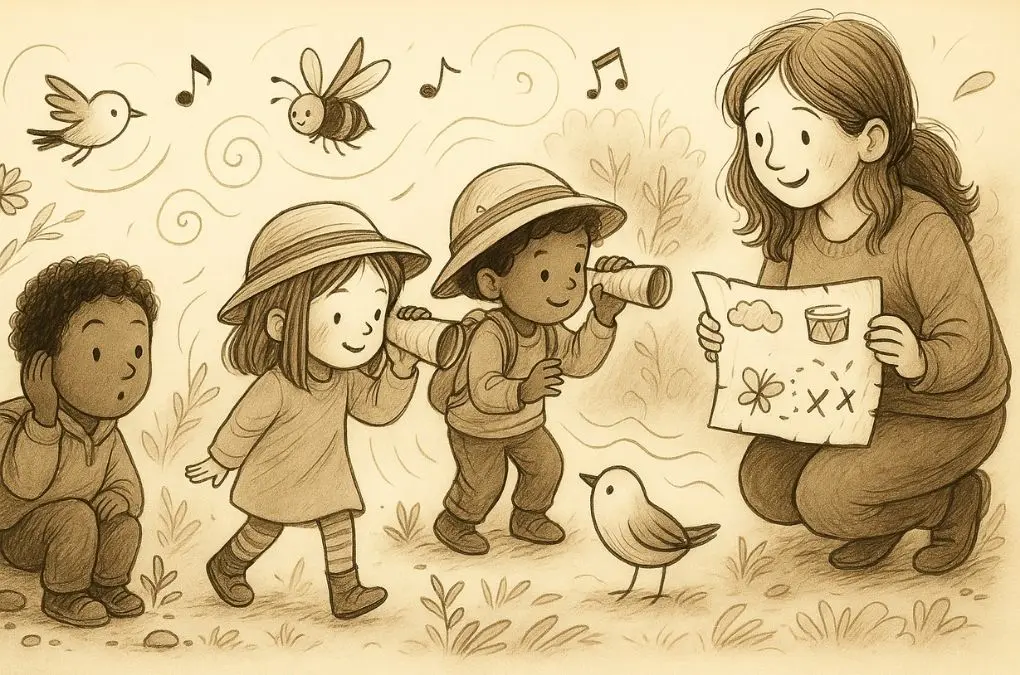
Instrumental Sounds
Exploring sound using musical instruments or household items. Learn more…
1. What This Game Is
A fun musical game where your child uses kitchen objects as instruments to explore different sounds and rhythms.
2. What Your Child Learns
Your child practises exploring and comparing sounds.
They also begin to recognise patterns and rhythms, which are important listening skills.
3. Why This Helps Reading
Speech has rhythm and patterns.
Children who can hear and copy rhythms often find it easier to notice patterns in spoken language.
These skills help children later recognise syllables and sound patterns in words.
4. What You Need
Simple kitchen items such as:
- pots or pans
- wooden spoons
- plastic containers
- metal lids
- mixing bowls
Each object should make a different sound when tapped.
5. How to Play
1️⃣ Give your child a few kitchen “instruments”.
2️⃣ Let them explore the sounds each object makes.
3️⃣ Try tapping different objects together.
4️⃣ Ask questions like:
“Which one sounds the loudest?”
5️⃣ Take turns making simple rhythms.
6. What You Can Say
Use language that draws attention to sound.
Examples:
- “That one sounds loud.”
- “This one sounds soft.”
- “Listen to the metal sound.”
- “Let’s try tapping slowly.”
You might also say:
“Can you copy my rhythm?”
7. Make It Easier
Start with just two instruments.
Let your child explore the sounds freely before trying rhythm copying.
8. Make It Harder
Try copying rhythm patterns.
Examples:
- tap tap pause tap
- tap pause tap tap
Ask your child to repeat the pattern.
You can also create a call-and-response band, where one person plays and the other copies.
9. Try This Next Time
Marching Band
Play instruments while marching around the house.
Fast vs Slow
Try playing rhythms:
- very slow
- very fast
Loud vs Quiet Band
Play music quietly like tiny mice, then loudly like giant elephants.
10. How Long to Play
Play for 5–10 minutes.
Musical activities often hold children’s attention slightly longer than listening games.
1. What This Game Is
A listening game where your child shakes containers and finds the ones that sound the same.
2. What Your Child Learns
Your child practises comparing and matching sounds.
They learn that different materials make different types of sounds.
3. Why This Helps Reading
When children learn phonics they need to notice small differences between sounds.
This game strengthens the listening skills needed to tell sounds apart, which later helps children hear differences between sounds like:
s and sh
b and p
4. What You Need
Small containers such as:
- plastic eggs
- small tubs
- yoghurt pots
- spice jars
Fill them with materials like:
- rice
- pasta
- lentils
- beads
- sand
Make two containers with each material so you have matching pairs.
5. How to Play
1️⃣ Shake one container.
2️⃣ Ask your child to listen carefully.
3️⃣ Shake another container.
4️⃣ Ask:
“Do these sound the same or different?”
5️⃣ Try to find the matching pair.
Once the pair is found, shake them together to check.
Want a ready-to-use version of this activity?
Download the free printable worksheet to guide the game and extend the learning.
6. What You Can Say
Use language that focuses attention on sound.
Examples:
“Listen carefully to this one.”
“That sounds very soft.”
“This one sounds louder.”
“Do they sound the same or different?”
You can also say:
“Let’s shake them slowly and listen.”
7. Make It Easier
Use only two pairs to start with.
Shake both containers for your child before asking them to match them.
8. Make It Harder
Add more containers.
Try 6–8 shakers and ask your child to find all the matching pairs.
You can also mix them up and play a sound memory game.
9. Try This Next Time
Guess What’s Inside
Shake the container and ask:
“What do you think is inside?”
Loud vs Quiet Sorting
Ask your child to sort shakers into:
loud sounds
quiet sounds
Fast and Slow Shaking
Shake containers in different ways and compare how the sound changes.
10. How Long to Play
Play for 5 minutes or until all pairs are matched.
Children usually enjoy repeating the game several times.
1. What This Game Is
A listening game where your child hears a pattern of sounds and copies it exactly.
2. What Your Child Learns
Your child practises remembering and repeating sound sequences.
3. Why This Helps Reading
When children learn phonics they must remember a sequence of sounds and blend them together to read a word.
For example:
c – a – t → cat
Games that practise remembering sound patterns help strengthen this important listening skill.
4. What You Need
Nothing — just your hands and body.
Optional items:
- drum
- table to tap
- wooden spoons
5. How to Play
1️⃣ Tell your child to listen carefully.
2️⃣ Make a sound pattern.
Example:
clap – clap – pause – clap
3️⃣ Ask your child to copy the pattern.
4️⃣ Repeat with different patterns.
5️⃣ Take turns being the leader.
6. What You Can Say
Encourage careful listening.
Examples:
- “Listen carefully to the pattern.”
- “Now copy the sounds.”
- “Let’s try again.”
You might also say:
“Can you make the same pattern?”
7. Make It Easier
Use very short patterns.
Examples:
- clap clap
- clap pause clap
You can repeat the pattern twice before your child copies.
8. Make It Harder
Add more sounds to the pattern.
Example:
clap – stomp – tap – clap
You can also mix different sounds:
- clap
- stomp
- tap table
- click fingers
9. Try This Next Time
Movement Pattern
Use movements instead of sounds.
Example:
jump – clap – stomp
Instrument Pattern
Use instruments or household objects.
Memory Challenge
Make a longer pattern and see if your child can repeat it.
10. How Long to Play
Play for 3–5 minutes.
Children often enjoy taking turns leading the patterns.

Body Percussion
Clapping, stomping, tapping rhythms. Learn more…
1. What This Game Is
A listening game where your child copies the clapping pattern you make.
2. What Your Child Learns
Your child practises listening carefully and remembering sound patterns.
This skill is called auditory memory.
3. Why This Helps Reading
When children read, they must remember a sequence of sounds and blend them together.
For example, when sounding out c-a-t, children must hear and remember all three sounds in order.
Games that practise remembering sound patterns help build this important skill.
4. What You Need
Nothing — just your hands and attention.
5. How to Play
1️⃣ Tell your child:
“Listen carefully and copy my clapping.”
2️⃣ Clap a simple pattern.
Examples:
- clap clap
- clap pause clap
- clap clap clap
3️⃣ Ask your child to repeat the pattern.
4️⃣ Take turns being the leader.
Want a ready-to-use version of this activity?
Download the free printable worksheet to guide the game and extend the learning.
6. What You Can Say
Use language that encourages careful listening.
Examples:
- “Listen carefully to my claps.”
- “Now it’s your turn.”
- “Let’s try that again.”
- “That was a tricky pattern!”
You might also say:
“Can you clap it exactly the same way?”
7. Make It Easier
Start with very simple patterns.
Examples:
- clap clap
- clap pause clap
You can also clap the pattern twice before your child copies.
8. Make It Harder
Try longer patterns.
Examples:
- clap clap pause clap clap
- clap pause clap pause clap
You can also mix different sounds:
- clap
- stomp
- tap table
Example pattern:
clap stomp clap
9. Try This Next Time
Animal Sounds
Instead of clapping, try:
- stomp like an elephant
- tiptoe taps like a mouse
Body Percussion
Use different sounds:
- clap hands
- tap knees
- click fingers
- stomp feet
Movement Patterns
Copy movements instead of sounds:
- jump
- clap
- spin
10. How Long to Play
Play for 3–5 minutes.
Children usually enjoy 5–10 patterns per game.
1. What This Game Is
A creative game where you and your child use your bodies to make the sounds of a rainstorm.
2. What Your Child Learns
Your child practises listening to and copying sound patterns and rhythms.
They also learn to recognise how sounds can start quietly, grow louder, and become quiet again.
3. Why This Helps Reading
Speech has rhythm and patterns.
Children who can hear and copy rhythms are better able to notice patterns in spoken words, including syllables and stress patterns.
4. What You Need
Nothing — just your hands and body.
5. How to Play
1️⃣ Tell your child you are going to make a rainstorm together.
2️⃣ Start with quiet sounds:
- rub hands together (wind)
3️⃣ Add light rain:
- tap fingers softly
4️⃣ Add heavier rain:
- clap hands
5️⃣ Finish with thunder:
- stomp feet
6️⃣ Slowly make the storm quiet again.
6. What You Can Say
Use descriptive language to help your child notice the sounds.
Examples:
- “The wind is starting to blow.”
- “The rain is getting heavier.”
- “Now the thunder is coming!”
- “The storm is getting quieter again.”
You might also say:
“Can you copy my storm sounds?”
7. Make It Easier
Use just two sounds at first.
Example:
- rub hands
- clap hands
Let your child copy each sound slowly.
8. Make It Harder
Try adding more stages to the storm.
Example:
wind → drizzle → rain → heavy rain → thunder
You can also ask your child to lead the storm while you copy them.
9. Try This Next Time
Storm Conductor
Let your child control the storm by choosing which sound happens next.
Animal Storm
Use animal movements instead of rain sounds.
Example:
- elephant stomps
- mouse taps
- bird flaps
Speed Storm
Change the speed of the storm:
- slow rain
- fast rain
- slow thunder
10. How Long to Play
Play for 3–5 minutes.
Children often enjoy repeating the storm several times.
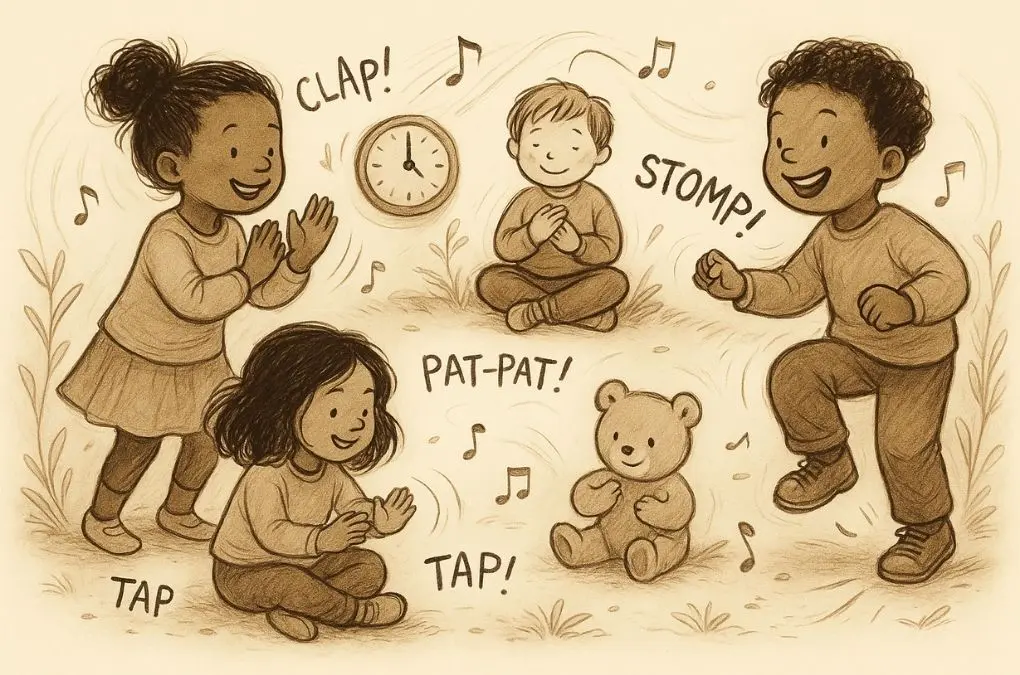
Rhythm and Rhyme
Enjoying rhymes, songs, and syllable patterns. Learn more…
1. What This Game Is
A playful activity where you sing or say nursery rhymes together and help your child notice the rhyming words.
2. What Your Child Learns
Your child begins to hear when words sound the same at the end.
This is called rhyming awareness.
3. Why This Helps Reading
Children who can recognise rhymes often develop stronger phonological awareness, which helps them later recognise patterns in words.
For example:
- cat / hat / bat
- dog / log
Recognising these patterns supports early reading and spelling.
4. What You Need
Any nursery rhymes you know.
Popular ones include:
- Twinkle Twinkle Little Star
- Incy Wincy Spider
- Hickory Dickory Dock
- Humpty Dumpty
- Row Row Row Your Boat
Books or videos can also help, but they are not necessary.
5. How to Play
1️⃣ Say or sing a nursery rhyme together.
2️⃣ Pause before the rhyming word.
Example:
“Twinkle twinkle little…”
3️⃣ Let your child finish the rhyme.
Example:
star
4️⃣ Repeat the rhyme several times so your child becomes familiar with it.
6. What You Can Say
Draw your child’s attention to the rhyming words.
Examples:
- “Star and are sound the same.”
- “Cat and hat rhyme.”
- “Those words sound the same at the end.”
You can also ask:
“Can you hear the rhyming words?”
7. Make It Easier
Repeat the same rhyme several times.
Children often need to hear rhymes many times before they recognise the pattern.
You can also emphasise the rhyme strongly:
“Twinkle twinkle little staaaar.”
8. Make It Harder
Ask your child to think of another rhyming word.
Example:
“What rhymes with cat?”
Possible answers:
- hat
- bat
- mat
Even silly rhymes are useful.
9. Try This Next Time
Silly Rhymes
Change the rhyme to something funny.
Example:
“Twinkle twinkle little car.”
Rhyme Spotting
Ask your child:
“Which two words rhyme?”
Rhyme Actions
Add actions to the rhyme to make it more fun.
Example:
Incy Wincy Spider climbing with fingers.
10. How Long to Play
Play for 3–5 minutes.
Rhymes are especially effective when repeated often during the day.
1. What This Game Is
A simple game where you say most of a rhyme and pause so your child can finish the last word.
2. What Your Child Learns
Your child practises recognising rhyming patterns in language.
They begin to predict the word that sounds right at the end of a rhyme.
3. Why This Helps Reading
Recognising rhymes helps children notice patterns in sounds within words.
This awareness makes it easier for children to later understand how words are built from sounds.
For example:
- cat / hat / bat
- sun / fun / run
4. What You Need
Nothing — just familiar rhymes or simple rhyming sentences.
5. How to Play
1️⃣ Say a rhyme your child already knows.
2️⃣ Pause just before the rhyming word.
Example:
“Humpty Dumpty sat on a…”
3️⃣ Let your child finish the rhyme.
Example:
wall
4️⃣ Repeat with other rhymes.
6. What You Can Say
Encourage your child to listen to the sound pattern.
Examples:
- “What word comes next?”
- “Listen to the rhyme.”
- “Which word sounds right?”
You might also say:
“Let’s say the rhyme together.”
7. Make It Easier
Give two options.
Example:
“Humpty Dumpty sat on a… wall or tree?”
You can also repeat the rhyme together several times before pausing.
8. Make It Harder
Create your own rhyming sentences.
Examples:
“I saw a cat wearing a…”
Possible answers:
- hat
- mat
- bat
Even silly answers are helpful.
9. Try This Next Time
Silly Rhymes
Use funny endings.
Example:
“Humpty Dumpty sat on a banana.”
Children often love the surprise.
Rhyme Challenge
Ask:
“Can you think of another word that rhymes with cat?”
Story Rhymes
Make up rhymes during story time.
Example:
“The dog sat on a…”
10. How Long to Play
Play for 3–5 minutes.
You can easily play this game throughout the day during conversations or reading.
1. What This Game Is
A listening game where your child becomes a rhyme detective, deciding whether two words rhyme or not.
2. What Your Child Learns
Your child practises listening carefully to the ending sounds of words.
They learn to notice when words sound the same at the end.
3. Why This Helps Reading
Rhyming helps children recognise patterns in sounds within words.
Children who are good at hearing rhymes often find it easier to recognise sound patterns when learning to read and spell.
4. What You Need
Nothing — just spoken words.
You can play this game anywhere:
- at home
- in the car
- while walking
- during bath time
5. How to Play
1️⃣ Tell your child they are a rhyme detective.
2️⃣ Say two words.
Example:
cat – hat
3️⃣ Ask:
“Do these words rhyme?”
4️⃣ If they rhyme, say yes.
If they do not rhyme, say no.
5️⃣ Try lots of word pairs.
Want a ready-to-use version of this activity?
Download the free printable worksheet to guide the game and extend the learning.
6. What You Can Say
Encourage your child to listen to the ending sounds.
Examples:
- “Listen carefully to the end of the words.”
- “Cat… hat… do they sound the same at the end?”
- “Dog… log… do those rhyme?”
You might also say:
“Those words sound the same at the end.”
7. Make It Easier
Stretch the words so the rhyme is clearer.
Example:
“caaat… haaat”
You can also repeat the words slowly.
8. Make It Harder
Use words that almost rhyme.
Example:
cat – cap
Ask your child:
“Do these rhyme or sound different?”
9. Try This Next Time
Silly Rhyme Detective
Include nonsense words.
Example:
cat – zat
Children often enjoy silly words.
Picture Version
Use toys or pictures and ask:
“Which ones rhyme?”
Speed Round
See how many rhymes your child can detect quickly.
10. How Long to Play
Play for 3–5 minutes.
You can easily play this game during everyday activities.
1. What This Game Is
A playful pretend cooking game where you make a “rhyming soup” by adding words that rhyme with each other.
2. What Your Child Learns
Your child practises thinking of rhyming words.
This helps them notice how word endings sound the same.
3. Why This Helps Reading
When children generate rhyming words, they begin to understand that words share sound patterns.
This awareness helps them later recognise patterns when reading words such as:
- cat
- hat
- bat
4. What You Need
A pretend cooking setup such as:
- bowl or pot
- spoon
Optional items:
- toy food
- small toys
- picture cards
You can also simply pretend to add words to the soup.
5. How to Play
1️⃣ Tell your child you are making silly rhyming soup.
2️⃣ Start with a word.
Example:
“Today our soup needs words that rhyme with cat.”
3️⃣ Pretend to add rhyming ingredients.
Examples:
- hat
- bat
- mat
4️⃣ Stir the soup after each word.
5️⃣ Invite your child to add their own rhyming word.
6. What You Can Say
Encourage your child to listen to the rhyme.
Examples:
- “Cat… hat… those rhyme.”
- “What else could go in our soup?”
- “That word sounds the same at the end.”
You might say:
“Let’s add another rhyming ingredient!”
7. Make It Easier
Give suggestions.
Example:
“Does bat rhyme with cat?”
You can also repeat the rhyme pattern slowly.
8. Make It Harder
Ask your child to think of rhymes without help.
You can also try different starting words such as:
- dog
- sun
- cake
9. Try This Next Time
Silly Soup
Add nonsense words.
Example:
“Cat… hat… zat!”
Children often enjoy making up funny words.
Toy Soup
Put toys in the bowl when the words rhyme.
Rhyme Restaurant
Pretend your child is a chef serving rhyming food.
10. How Long to Play
Play for 3–5 minutes.
Children often enjoy repeating the game with new rhyming words.
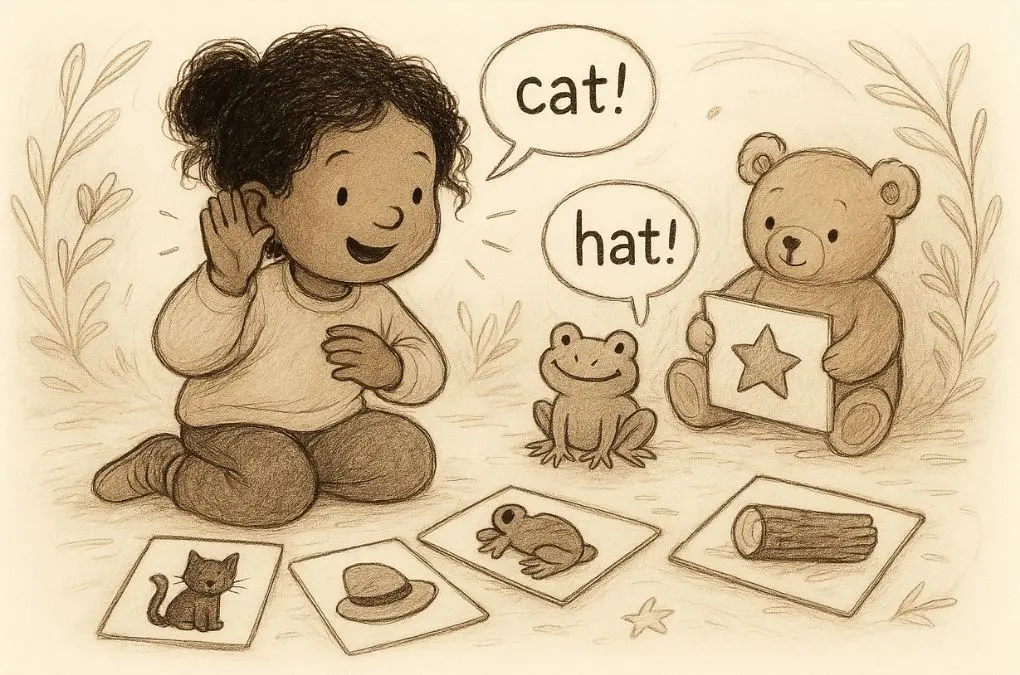
Alliteration
Noticing words that start with the same sound. Learn more…
1. What This Game Is
A playful word game where you make silly phrases using words that start with the same sound.
2. What Your Child Learns
Your child practises noticing the first sound in words.
This is called alliteration.
3. Why This Helps Reading
When children begin phonics, they need to hear the first sound in a word.
For example:
- s in sun
- b in ball
Alliteration games help children focus on these beginning sounds.
4. What You Need
Nothing — just words and imagination.
5. How to Play
1️⃣ Choose a simple starting sound.
Example:
s
2️⃣ Make a silly phrase using that sound.
Example:
“Slimy Snail Sammy.”
3️⃣ Say the phrase together.
4️⃣ See if your child can think of another phrase.
Example:
“Bouncing baby bear.”
Want a ready-to-use version of this activity?
Download the free printable worksheet to guide the game and extend the learning.
6. What You Can Say
Emphasise the starting sound.
Examples:
- “Sssilly sssnake.”
- “Bbbbouncing bbbear.”
- “Those words start with the same sound.”
You might also say:
“Can you hear the same sound at the beginning?”
7. Make It Easier
Use just two words.
Example:
- big bear
- funny fish
Repeat the starting sound clearly.
8. Make It Harder
Create longer silly phrases.
Examples:
- big brown bear
- silly slippery snake
You can also ask your child to think of objects that start with the same sound.
9. Try This Next Time
Alliteration Hunt
Find objects in the room that start with the same sound.
Example:
sock
sand
spoon
Name Game
Use people’s names.
Example:
- Jumping Jack
- Dancing Daisy
Animal Game
Invent silly animal names.
Example:
- Larry the Lion
- Peter the Penguin
10. How Long to Play
Play for 3–5 minutes.
You can also play during everyday conversations.
1. What This Game Is
A version of the classic I Spy game where your child guesses an object by listening to its starting sound.
2. What Your Child Learns
Your child practises noticing the first sound in words.
3. Why This Helps Reading
When children begin phonics they must recognise the initial sound in words.
For example:
- b in ball
- t in table
This game helps children focus on these beginning sounds.
4. What You Need
Just objects around you.
You can play:
- at home
- in the car
- in the park
- in a shop
5. How to Play
1️⃣ Choose an object your child can see.
Example:
sock
2️⃣ Say:
“I spy something beginning with ssss.”
3️⃣ Stretch the first sound.
4️⃣ Let your child guess the object.
5️⃣ Take turns choosing objects.
6. What You Can Say
Emphasise the beginning sound.
Examples:
- “Sssssock.”
- “Listen to the first sound.”
- “What starts with ssss?”
You might also say:
“Can you hear the sound at the beginning?”
7. Make It Easier
Choose objects that are close and obvious.
Give a clue if needed.
Example:
“It’s something you wear.”
8. Make It Harder
Use objects that are further away or less obvious.
You can also ask your child to find another object with the same starting sound.
9. Try This Next Time
Sound Hunt
Find several objects that start with the same sound.
Example:
sock
sand
spoon
Car Journey Game
Play while travelling.
Outdoor Version
Use objects you see outside.
Example:
tree
truck
10. How Long to Play
Play for 3–5 minutes.
This game can easily be played during everyday routines.
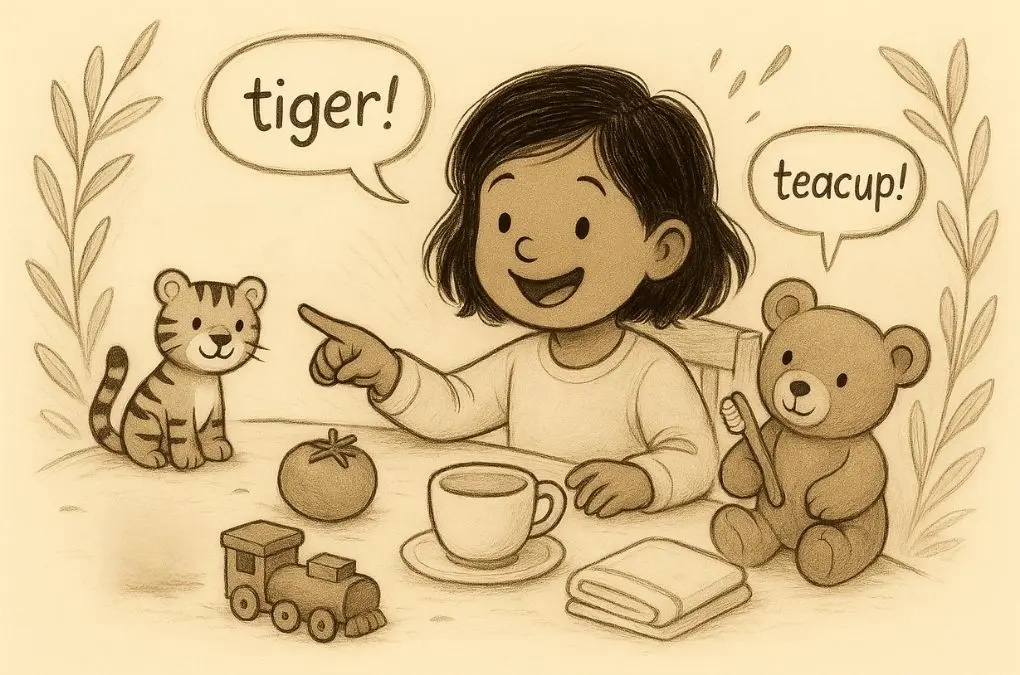
Voice Sounds
Playing with different vocal sounds (e.g. robot talk, animal noises). Learn more…
1. What This Game Is
A fun guessing game where you make animal sounds and your child guesses the animal.
2. What Your Child Learns
Your child practises listening to and producing different voice sounds.
They also learn that the mouth and voice can make many different types of sounds.
3. Why This Helps Reading
When learning phonics, children need to become aware of how sounds are made with the mouth.
Voice sound games help children explore pitch, volume, and sound changes, which supports awareness of speech sounds.
4. What You Need
Nothing — just your voice and imagination.
Optional:
- toy animals
- animal pictures
5. How to Play
1️⃣ Tell your child you are going to make an animal sound.
2️⃣ Make the sound.
Examples:
- moo
- roar
- hiss
- baa
- quack
3️⃣ Ask:
“Which animal makes that sound?”
4️⃣ Let your child guess.
5️⃣ Swap roles so your child makes the sound.
Want a ready-to-use version of this activity?
Download the free printable worksheet to guide the game and extend the learning.
6. What You Can Say
Encourage listening and sound exploration.
Examples:
- “Listen carefully.”
- “What animal could that be?”
- “Can you make that sound too?”
You might also say:
“Let’s try another animal sound.”
7. Make It Easier
Use very familiar animals.
Examples:
- cow
- dog
- cat
- duck
You can also show a toy or picture after the guess.
8. Make It Harder
Try less common animals.
Examples:
- owl
- snake
- donkey
You can also add movement while making the sound.
9. Try This Next Time
Animal Acting
Act like the animal while making the sound.
Farm Game
Pretend you are visiting a farm and meeting different animals.
Guess the Animal
Close your eyes and guess the animal sound.
10. How Long to Play
Play for 3–5 minutes.
Children often enjoy making many animal sounds in one game.
1. What This Game Is
A playful activity where you and your child experiment with making different sounds using your voices.
2. What Your Child Learns
Your child explores how different sounds can be made using the mouth and voice.
They also practise controlling volume, pitch, and speed of sounds.
3. Why This Helps Reading
Speech sounds are produced using the mouth, tongue, lips, and breath.
When children experiment with voice sounds, they become more aware of how sounds are formed, which helps them later when learning phonics.
4. What You Need
Nothing — just your voice and imagination.
5. How to Play
1️⃣ Tell your child you are going to make some funny sounds together.
2️⃣ Choose a sound to copy.
Examples:
- fire engine siren → “nee-nah nee-nah”
- car engine → “vroom”
- wind → “whooooosh”
- train → “choo choo”
3️⃣ Take turns making the sounds.
4️⃣ Encourage your child to invent their own sounds.
Want a ready-to-use version of this activity?
Download the free printable worksheet to guide the game and extend the learning.
6. What You Can Say
Encourage experimentation.
Examples:
- “Can you make the sound louder?”
- “Can you make it quieter?”
- “Can you make the sound very slow?”
- “Can you make the sound high like a siren?”
You might also say:
“Let’s see how many sounds our voices can make.”
7. Make It Easier
Start with familiar everyday sounds.
Examples:
- car
- train
- wind
Say the sound first and ask your child to copy.
8. Make It Harder
Try changing the pitch or speed of sounds.
Example:
- fast train
- slow train
- loud siren
- quiet siren
You can also ask your child to guess the sound you are making.
9. Try This Next Time
Sound Story
Tell a simple story and add voice sound effects.
Example:
“The wind was blowing… whooooosh.”
Vehicle Game
Make the sounds of different vehicles.
Example:
- helicopter
- ambulance
- motorbike
Robot Voice
Try talking like robots or aliens.
10. How Long to Play
Play for 3–5 minutes.
This activity often works well during imaginative play or storytelling.
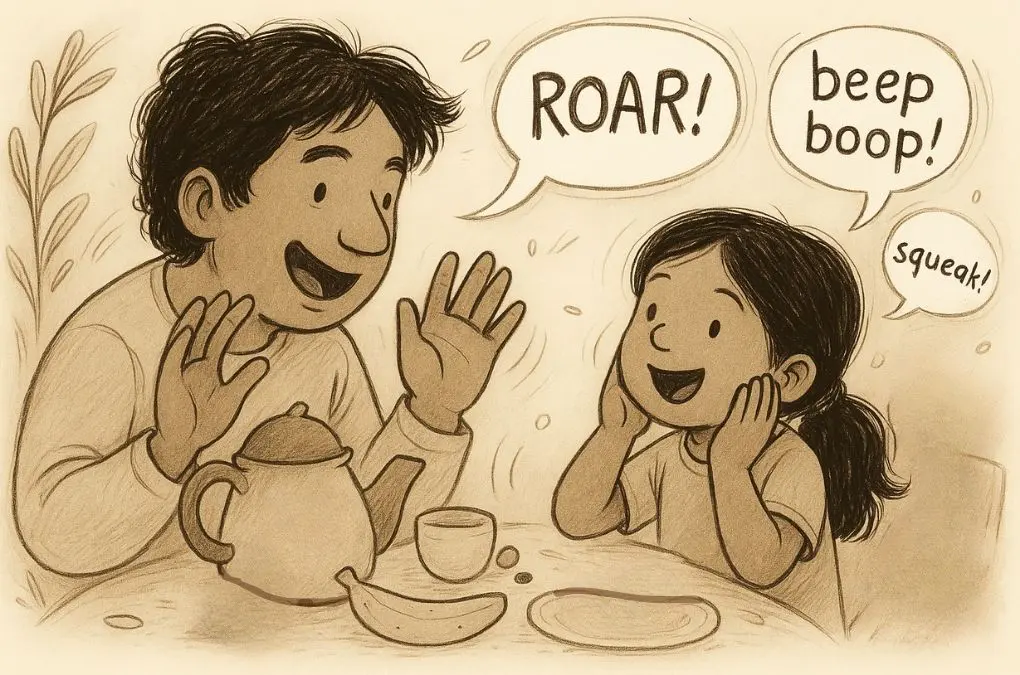
Oral Blending and Segmenting
Hearing, blending and segmenting spoken sounds into words (e.g. “c-a-t” = cat). Learn more…
1. What This Game Is
A fun game where you talk like a robot by saying the sounds in a word separately, and your child guesses the word.
2. What Your Child Learns
Your child practises blending sounds together to hear a whole word.
3. Why This Helps Reading
Blending is one of the core skills needed for reading.
When children read words in phonics they must combine sounds, for example:
c – a – t → cat
Practising oral blending without letters helps children understand how sounds join together to make words.
4. What You Need
Everyday objects around the room.
Examples:
- cup
- bag
- hat
- sock
- pen
5. How to Play
1️⃣ Tell your child you are going to talk like a robot.
2️⃣ Say the sounds in a word slowly.
Example:
“c – u – p”
3️⃣ Ask:
“What word did the robot say?”
4️⃣ Your child blends the sounds and guesses the word.
5️⃣ Let your child be the robot next.
6. What You Can Say
Encourage your child to listen carefully.
Examples:
- “Listen to the robot sounds.”
- “Let’s put the sounds together.”
- “What word did the robot say?”
You might also say:
“Let’s try another robot word.”
7. Make It Easier
Use short words with two or three sounds.
Examples:
- up
- on
- cup
- hat
You can also point to the object while saying the sounds.
8. Make It Harder
Try slightly longer words.
Examples:
- sock
- frog
- lamp
You can also say the sounds faster to make the challenge harder.
9. Try This Next Time
Robot Instructions
Give instructions in robot talk.
Example:
“Pick up the b-a-g.”
Robot Treasure Hunt
Hide objects and give robot clues.
Robot Role Play
Let your child pretend to be the robot giving instructions.
10. How Long to Play
Play for 3–5 minutes.
This game works well during everyday routines such as tidy-up time.
1. What This Game Is
A game where your child listens to sounds spoken separately and finds the object that matches the blended word.
2. What Your Child Learns
Your child practises blending sounds together to recognise a word.
3. Why This Helps Reading
Blending sounds is one of the most important skills in phonics.
When children learn to read, they combine sounds such as:
b – a – g → bag
Practising this skill orally helps children learn how sounds join together to form words.
4. What You Need
A basket or container with a few simple objects.
Examples:
- cup
- hat
- bag
- sock
- pen
Choose objects with simple, clear names.
5. How to Play
1️⃣ Place the objects in a basket.
2️⃣ Tell your child to listen carefully.
3️⃣ Say the sounds in a word slowly.
Example:
“b – a – g”
4️⃣ Ask your child to find the object.
Example:
bag
5️⃣ Let your child take turns giving sound clues.
Want a ready-to-use version of this activity?
Download the free printable worksheet to guide the game and extend the learning.
6. What You Can Say
Encourage your child to blend the sounds.
Examples:
- “Listen carefully to the sounds.”
- “Let’s put the sounds together.”
- “What word do the sounds make?”
You might also say:
“Can you find the object?”
7. Make It Easier
Use just two objects at first.
Example:
- cup
- hat
Say the sounds slowly and clearly.
8. Make It Harder
Add more objects to the basket.
You can also choose objects with similar sounds to increase the challenge.
9. Try This Next Time
Treasure Hunt
Hide the objects around the room and give sound clues.
Mystery Basket
Close your eyes and guess the object after hearing the sounds.
Child as Teacher
Let your child say the sounds and you find the object.
10. How Long to Play
Play for 3–5 minutes.
Children usually enjoy several rounds of guessing.
1. What This Game Is
A listening game where you and your child tap or drum the sounds in words.
Each tap represents a sound, helping children hear that words are made up of separate sounds.
2. What your child learns
Your child practises hearing and separating sounds in words.
3. Why it helps reading
To read words, children must learn that words are made of separate sounds.
For example:
c – a – t
Activities like Drum Talk help children begin to notice the individual sounds in words.
4. What you need
Something to tap or drum, such as:
- a toy drum
- a saucepan
- a table
- a box
You can also clap instead.
5. How to play
1️⃣ Tell your child you are going to talk like a drum.
2️⃣ Say a word slowly.
Example:
dog
3️⃣ Tap the drum once for each sound.
Example:
d – o – g
🥁 🥁 🥁
4️⃣ Ask your child to tap the sounds with you.
5️⃣ Try more words together.
6. What you can say
- “Let’s tap the sounds.”
- “How many sounds did we hear?”
- “Let’s try another word.”
- “Can you drum the sounds?”
7. Make it easier
Start with short words.
Examples:
- up
- on
- dog
- cat
Tap slowly and clearly.
8. Make it harder
Let your child choose the word.
9. Try this next time
Clap Talk
Clap the sounds instead of drumming.
Robot Drum
Combine with robot talking:
“c – a – t”
Then drum the sounds.
Movement version
Jump or stomp for each sound.
10. How long to play
Play for 3–5 minutes.
Children usually enjoy several rounds of tapping sounds.
1. What This Game Is
A listening game where you clap the beats in words to show how many parts the word has.
2. What Your Child Learns
Your child learns that words can be broken into smaller sound parts called syllables.
3. Why This Helps Reading
Understanding syllables helps children hear how words are structured and segmented.
This skill prepares children for later phonics skills like breaking words into sounds and blending them back together.
4. What You Need
Nothing — just words and your hands.
You can use:
- everyday objects
- food
- animals
- toys
5. How to Play
1️⃣ Say a word.
Example:
“Apple”
2️⃣ Clap the beats in the word.
Example:
ap-ple
👏 👏
3️⃣ Ask your child to clap the beats with you.
4️⃣ Try different words together.
Examples:
- ba-na-na (3 claps)
- pen-cil (2 claps)
- cat (1 clap)
6. What You Can Say
Help your child notice the beats.
Examples:
- “Let’s clap the parts of the word.”
- “How many claps did we hear?”
- “That word has two beats.”
You might say:
“Listen to the beats in the word.”
7. Make It Easier
Start with two-syllable words.
Examples:
- ap-ple
- ta-ble
- ba-by
Say the word slowly before clapping.
8. Make It Harder
Try longer words.
Examples:
- ba-na-na (3)
- el-e-phant (3)
- hip-po-pot-a-mus (5)
Ask your child to guess the number of claps first.
9. Try This Next Time
Jump the Syllables
Jump instead of clapping.
Drum the Syllables
Tap on a table or drum instead of clapping.
Object Game
Pick an object in the room and clap its name.
10. How Long to Play
Play for 3–5 minutes.
You can also play during everyday moments like mealtimes or tidy-up time.