I created this guide as a parent who understands that many parents want clear, practical help with blending — real ways to support your child’s reading at home alongside what they’re learning at school. I’ve gathered the key, most practical information about blending into one place, so you have simple, actionable help when you need it.
A Practical Parent’s Guide to Blending in Phonics
- The Story of Blending: The Journey Children Take
- Stage 1 — Oral Blending
- What Oral Blending Looks Like in Real Life
- Why Oral Blending Comes First
- Moving On to Written Blending
- Stage 2 — Blending Written Sounds
- How to Support Your Child with Written Blending
- When Blending Feels Tricky
- A Simple Blending Routine You Can Use at Home
- When It Helps to Revisit a Step
- The Blending Journey — Step by Step
- What’s Next?
- Blending FAQs
What Blending Really Looks Like — and What to Do at Each Stage
Blending can feel like one of those phonics terms that gets used a lot, but isn’t always explained clearly.
It’s also something many parents worry about, because it can seem simple on paper, but much harder when you’re sitting with your child and trying to help them put sounds together to read a word.
The most helpful thing I’ve learned is that blending doesn’t start with letters.
It starts with listening.
Children begin learning to put sounds together in their heads (Phase 1), then they are taught to recognise those sounds when written down (Phase 2). The first part is called oral blending, and it is the foundation that makes reading easier later on.
Once letter sounds are introduced, the job changes slightly — now children are being asked to look at written letters, recognise, then say the sounds, hold them in their memory and then blend them together to read a word.
That is why blending can suddenly feel tricky.
Understanding this progression can help you support your child in the right way at the right time.
The Story of Blending — The Journey Children Usually Take
Children usually move through blending in this order:
1️⃣ Notice sounds around them
(cars, doors, footsteps, voices)
↓
2️⃣ Play with sounds
(rhymes, silly sounds, sound games)
↓
3️⃣ Blend spoken sounds
You say: /c/ /a/ /t/
They say: cat
↓
4️⃣ See and Recognise letters
They see the letter s and say its sound /s/
↓
5️⃣ Blend written sounds
They see: c a t
They say: cat
↓
6️⃣ Read words independently
The sounds come together smoothly
While children develop these skills at different rates and there is often plenty of overlap, when you see it laid out like this, blending starts to make much more sense.
Children are not being asked to do one single thing. They are building up to it step by step.
And that is why oral blending matters so much.
Stage 1 — Oral Blending
The First and Most Important Step
This stage happens before reading.
Children are asked to listen to sounds and work out the word.
Example:
You say:
“/d/ /o/ /g/”
Your child says:
“dog!”
No letters are involved. They are simply listening to the sounds and working out the word.
It often happens very naturally through games, play and everyday conversation, which is one of the reasons it can be easy to overlook. But it is such an important part of the bigger picture.
Oral blending helps children learn that sounds can be pushed together to make a word. It helps them get used to hearing words in parts before they ever have to read those parts from the page.
That means when written blending begins later, it doesn’t feel quite so new.
What Oral Blending Looks Like in Real Life
Before I understood blending, I didn’t realise how often it can happen naturally during the day.
You might say things like:
- “Put on your /c/ /oa/ /t/.”
- “Find the /b/ /a/ /g/.”
- “Sit on the /ch/ /air/.”
Your child listens, works out the word and then responds.
That is oral blending happening in a very natural way.
And because it happens through normal conversation, it can be one of the easiest ways to build confidence without pressure.
Why Oral Blending Comes First
Something that really helped me understand this stage is knowing what children are actually learning.
Oral blending helps children learn to:
- listen carefully to sounds
- hold sounds in memory
- push sounds together
- recognise the word they make.
Without these earlier experiences, written blending can feel much harder than it needs to.
That’s why so many children benefit from lots of oral blending before they are expected to read words from print.
How to Practise Oral Blending
The most helpful practice is simple and playful.
Keep It Natural
Use blending in everyday moments rather than making it a big formal task.
Example:
Time to brush your /t/ /ee/ /th/.
That is enough.
Use Short, Simple Words First
Start with:
sun
dog
cat
map
bed
These are easiest to blend.
Practise Little and Often
Just:
1–2 minutes at a time
is enough.
A minute or two here and there is often far more helpful than a long session.
Moving on to Written Blending
Children usually find written blending easier when they can:
- blend spoken sounds easily
- recognise some letter sounds
- listen carefully
- remember sounds briefly.
This transition often happens in Reception. Although every child moves at their own pace.
The important thing is not to rush past the listening stage because it helps to build a strong foundation.
If you feel your child needs a bit more help with listening and sound awareness, you can try some of these Phase 1 phonics activities alongside written blending.
Stage 2 — Blending Written Sounds
When Letters Come into the Picture
Now the task changes.
This is usually the point where blending starts to feel different — and sometimes a bit harder.
Up until now, children have been listening to sounds and working out the word in their head. But once letters are introduced, they are being asked to do a few extra things at the same time.
Instead of hearing:
/d/ /o/ /g/
Children see:
d o g
They must:
- look at each letter
- remember the sound it makes
- hold those sounds in their head
- blend them together to read the word
That’s quite a big step when you think about it.
So if blending suddenly feels trickier at this stage, it doesn’t mean anything has gone wrong. It usually just means your child is adjusting to a new way of working with sounds.
What Changes at This Stage
One of the most helpful things is realising that your child is not just blending anymore — they are now juggling several skills at once.
They are learning to:
- look carefully at the letters
- say the sounds accurately
- remember the sounds briefly
- push them together smoothly
That’s why patience and practice matter so much here.
It’s also why short, calm sessions tend to work better than long ones.
How to Support Your Child with Written Blending
These are the simple approaches that are widely used in schools, and that many parents find helpful at home too.
Say the Sounds — Not the Letter Names
For example:
Say:
/t/ /a/ /p/
rather than:
tee ay pee
Letter names can get in the way of hearing the word clearly.
Point to Each Letter
This small physical movement can make a big difference.
You might show the word:
t a p
Then point to each letter as you say the sound:
/t/ /a/ /p/
After that, sweep your finger across the word and say it smoothly:
tap
These simple physical movements help children see how the sounds come together.
Stretch the sounds when you can
Some sounds can be stretched, which makes blending easier to hear.
For example:
ssssuuuun
This gives children time to hear the word forming, rather than trying to jump straight from separate sounds to the finished word.
If you’re ever unsure how to say the sounds clearly when supporting your child with written blending, our phonics sounds guide can help.
What to Say While Blending
You don’t need complicated instructions.
Simple, consistent language works best.
You might say:
- “Let’s say the sounds.”
- “Now push them together.”
- “What word do you hear?”
- “Let’s say it smoothly.”
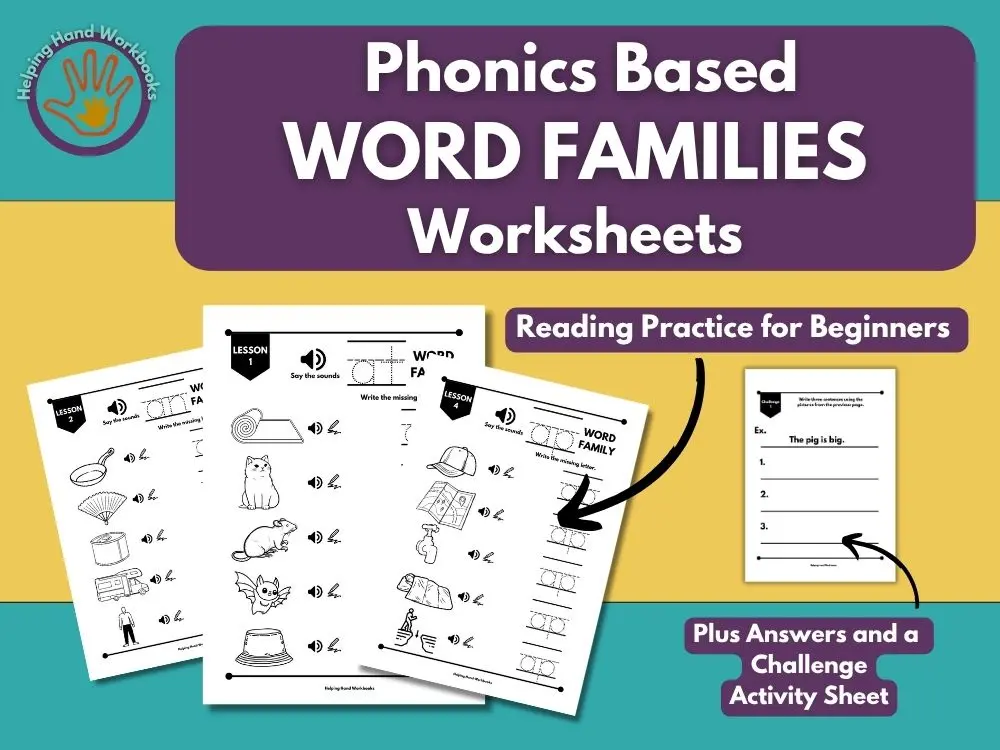
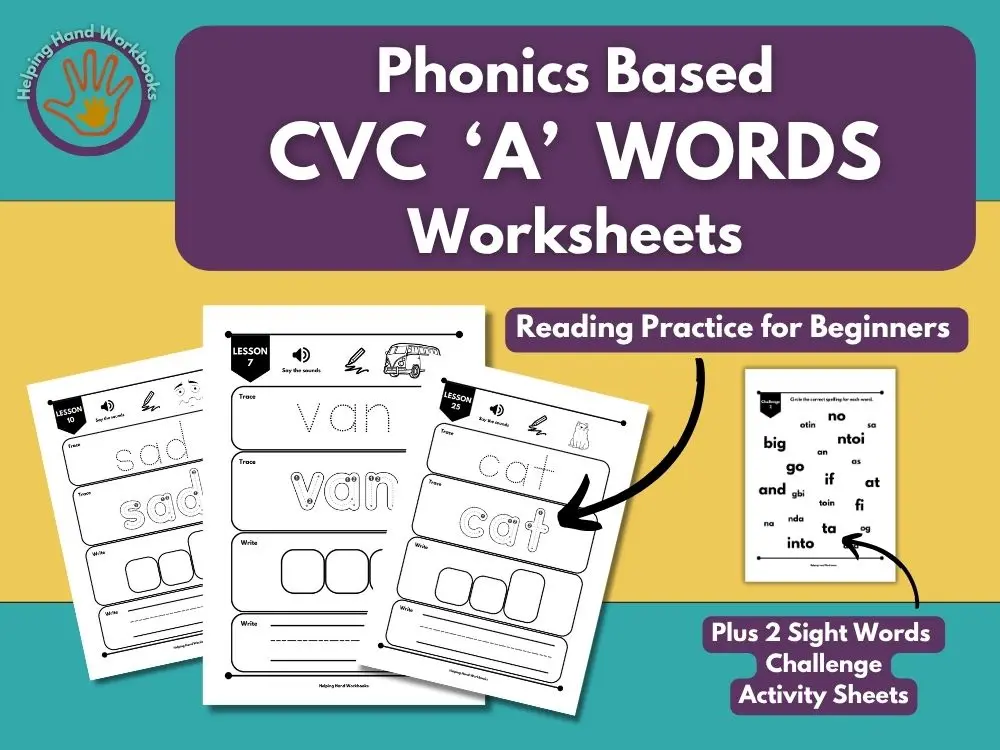
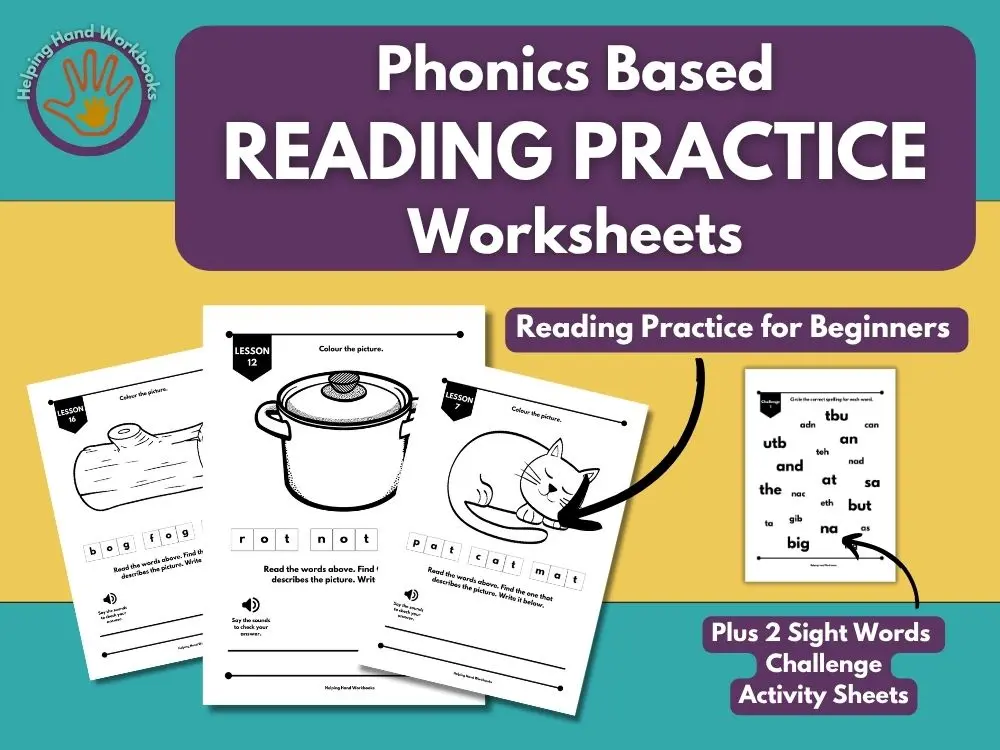
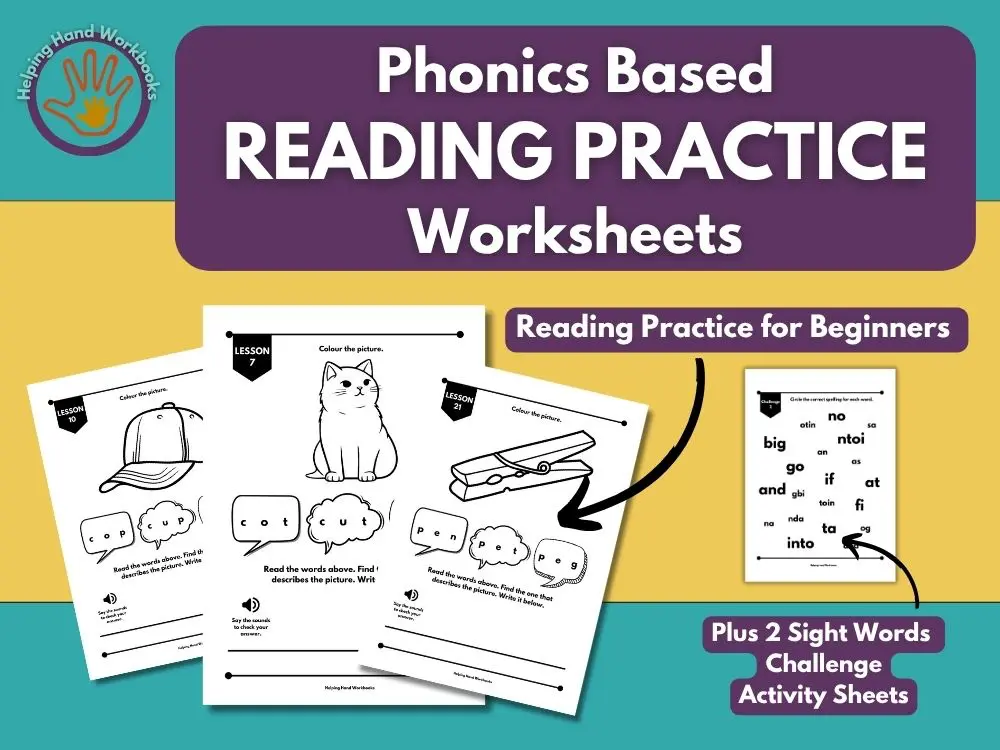
If you’d like a few extra opportunities to practise blending at home, our free blending worksheets provide simple, printable activities you can dip into when needed.
When blending feels tricky
Common situations — and what usually helps
Many parents seem to run into the same few challenges with blending.
The reassuring thing is that these are very common, and there are usually simple adjustments that can make things easier.
My child says the sounds but can’t read the word
You might hear:
/c/ /a/ /t/
And then a long pause.
What often helps here is slowing the process down and stretching the word slightly.
For example:
caaaaat
Then gently ask:
“What word did you hear?”
Giving the sounds more time to connect can make a real difference.
My child guesses instead of blending
This happens a lot, especially when children feel unsure.
One simple thing that helps is to remove distractions.
You can:
- cover the picture
- point to each letter
- go slowly through the sounds
And say:
“Let’s look carefully at the sounds.”
This shifts the focus back to blending.
My child blends very slowly
This can be worrying at first, but slow blending is actually a normal part of learning.
Speed usually comes later.
At this stage, it helps to focus on:
- getting the sounds right
- building confidence
- practising regularly
Accuracy comes before speed.
My child forgets the sounds while blending
If this happens, it often helps to go back to shorter words.
For example:
at
in
on
up
Short words are easier to hold in memory and blend successfully.
As confidence grows, longer words usually become easier too.
A simple blending routine you can use at home
One of the most helpful things for many families is having a very small, predictable routine.
It doesn’t need to be long.
For example:
1 minute — oral blending
2 minutes — written blending
1 minute — praise and repeat
That’s about:
4 minutes
And for many children, that can be enough practice for the day.
Consistency matters more than length.
Real-life ways to practise blending
Blending doesn’t always need to happen at the table.
Some of the easiest practice happens during everyday routines.
Getting ready
You might say:
“Put on your /s/ /o/ /ck/.”
Your child listens and says:
“sock”
Reading together
Show the word:
c a t
Then say:
“Let’s say the sounds.”
/c/ /a/ /t/
Sweep your finger across:
cat
Bedtime
You might say:
“Time to get into /b/ /e/ /d/.”
Small moments like these build confidence over time.
The most important tip to remember
Blending is a skill that develops with playful practice.
Children tend to make the best progress when:
- practice is short
- practice is calm
- practice happens regularly
- it feels like play rather than work
Those small, steady steps add up.
When it helps to revisit a step
Sometimes blending suddenly becomes harder.
If that happens, it can be really helpful to revisit oral blending alongside written blending.
This is especially useful if your child:
- becomes frustrated
- starts guessing words
- forgets sounds
- loses confidence
Strengthening that earlier listening stage can often make written blending easier again. This post shares simple ideas for practising oral blending in everyday moments.
A simple reminder to keep in mind
Blending begins with listening — letters come later.
That idea can take a lot of pressure off both you and your child.
And it helps us focus on building skills step by step, rather than rushing ahead.
The Blending Journey — Step by Step
Children usually move through blending in this order.
Hear sounds
↓
Play with sounds
↓
Blend spoken sounds (oral blending)
↓
See and recognise letters
↓
Blend written sounds
↓
Read words
What This Means for Parents
If blending feels difficult, it often helps to revisit previous steps alongside the stage you are currently working on.
Children build confidence when each step feels secure.
A Simple Way to Remember
Listening → Playing → Blending → Reading
What’s next?
As blending becomes more comfortable, the next step is usually practising with simple reading.
Short, carefully chosen decodable books give children the chance to use their blending skills in real reading.
You can find guidance on choosing suitable books on my decodable books page.
Blending FAQs for Parents
Practical answers to common questions about helping children blend sounds
What is blending in phonics?
Blending is the skill children use to put sounds together to read a word.
For example:
/c/ /a/ /t/
becomes
cat
It starts with listening to sounds and pushing them together in the right order. Over time, children learn to do the same thing with written letters when they begin reading.
Why is blending so important for learning to read?
Blending is what allows children to read unfamiliar words on their own.
When children can blend sounds, they can:
- read new words
- work out tricky words
- become more confident readers
Without blending, reading often feels like guessing rather than understanding.
At what age do children usually start blending?
Many children begin blending during Reception, usually around ages 4 to 5.
But this can vary a lot.
How do I know if my child is ready to start blending?
Children are often ready when they can:
- recognise some letter sounds
- listen carefully
- enjoy rhymes and sound games
- blend spoken sounds
You don’t need to see all of these perfectly — just signs that they are beginning to develop.
My child knows the sounds but still can’t blend them. Is this normal?
Yes — this is one of the most common stages in learning to read.
Blending requires children to:
- remember sounds
- hold them in their head
- push them together smoothly
That takes practice.
What usually helps is:
- slowing down the sounds
- stretching the word
- practising little and often.
Why does blending suddenly become harder when letters are introduced?
Because children are now doing several things at once.
They need to:
- recognise letters
- remember sounds
- hold sounds in memory
- blend them together
That extra load can make blending feel harder at first.
Should my child use letter names or sounds when blending?
Children should use sounds, not letter names.
For example:
Say:
/t/ /a/ /p/
rather than:
tee ay pee
Using sounds helps children hear the word more clearly and makes blending much easier.
What should I do if my child keeps guessing words instead of blending?
This is very common, especially when children feel unsure.
Simple things that often help include:
- covering the picture
- pointing to each letter
- slowing down the sounds
- practising shorter words
The goal is to bring the focus back to listening to the sounds.
How often should we practise blending at home?
Short, regular practice works best.
Even:
3–5 minutes a day
can make a big difference.
Blending improves through repetition.
What are the easiest words to start blending with?
Simple three-sound words are usually the best place to begin.
For example:
- cat
- dog
- sun
- map
- bed
These words are easier because the sounds are clear and predictable.
Is it normal for blending to be slow at first?
Yes — slow blending is completely normal.
Children often:
- say each sound carefully
- pause between sounds
- take time to join them together
Speed usually comes later, once they feel more confident.
When should we revisit oral blending?
It can help to revisit oral blending if your child:
- becomes frustrated
- forgets sounds
- guesses words
- struggles with written blending
Strengthening listening skills alongside written blending can sometimes make written blending easier.
Do I need to teach blending the same way as the school?
No — schools provide structured phonics teaching.
At home, your role is simply to support and reinforce what your child is learning.
Short, calm practice and encouragement are usually the most helpful things you can provide.
What is the most important thing to remember about blending?
Blending is a skill that develops gradually.
Children improve when:
- practice is short
- practice is calm
- practice happens regularly
- they feel confident.
Progress builds step by step.
If this guide has been helpful, feel free to share it with another parent who might find it useful too.