Moving from Phase 1 to Letter Sounds: What the Transition Really Looks Like – Week 17
Hello phonics friends! Grace here 👋
Let’s set the scene…
One day your child comes home and says:
“We learned a sound today.”
Lovely. Right.
Your child may say that… or
Instead, it might look a bit more like this:
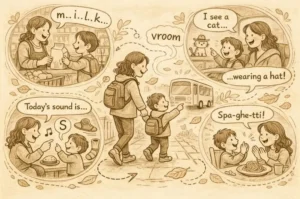
“Ssssssssss…”
(on repeat… the whole way home)
Or a sudden burst of excitement:
“Look! Sock! Sssssock!”
Or you’re in the supermarket and—
“Mummy! S for salad! SSSSSalad!” 😉
You might even see a full performance—
“Sammy snail says sssssss!”
as they crawl across the living room floor.
It’s playful.
It’s enthusiastic.
And it’s actually a really special moment.
You might also spot a few clues:
– a letter sheet in the book bag
– a new sound on the classroom wall
– a quick mention of phonics at pick-up
And suddenly you’re thinking:
“Wait… are we doing letters now?”
Exciting? Yes.
A little uncertain? Also yes.
Because phonics doesn’t arrive neatly—
it shows up as sound play, repetition… and often a lot of joyful noise and movement.
So this week, we’re going to look at what the move from Phase 1 phonics to letter sounds usually looks like — and how to support your child in a way that still feels playful, calm, and pressure-free.
- Greetings from Grace
- What moving from Phase 1 to letter sounds really means
- What the transition looks like in UK classrooms
- A simple real-life example of the transition
- Common parent worries at this stage
- How to support your child during the transition
- A helpful way to think about the change
- One small thing to try this week
- Week 18’s preview
- FAQs about moving from Phase 1 to letter sounds
First, a Gentle Reassurance
Moving on to letter sounds doesn’t mean Phase 1 is finished.
It doesn’t mean the sound games stop.
And it definitely doesn’t mean your child suddenly needs to read straight away.
Instead, what usually happens is something much simpler.
The listening skills your child has been building start to connect with letters.
That’s all.
The foundation stays — we just add the next layer.
If you’d like a clearer picture of how this step fits into the bigger phonics journey, you can explore:
Phonics phases explained — what each stage usually looks like in Nursery and Reception
What the Transition Often Looks Like in UK Classrooms
In nursery and early Reception, children usually move into letter sounds gradually.
You might notice small changes like:
- learning one or two new sounds each week
- bringing home simple phonics sheets
- spotting letters in books or on displays
- talking about sounds in their name
It rarely happens all at once.
And it’s not a sudden jump.
It’s more like a gentle step forward.
A Real-Life Example
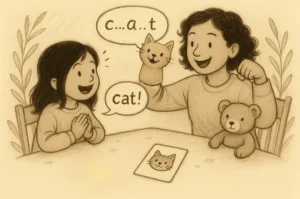
Imagine your child already enjoys robot talk.
You say:
/c/ /a/ /t/
They say:
“cat!”
Later, they see the letter c.
And they begin to realise:
“That letter makes the /c/ sound.”
The skill they already have — blending sounds — now connects to a symbol.
That’s the transition.
What Parents Often Worry About at This Stage
This is the point where new questions can pop up.
You might wonder:
“Should we start practising letters at home?”
or
“What if my child isn’t ready yet?”
or even
“What if I do it wrong?”
All very normal thoughts.
Especially when things start to change.
But here’s something important to remember:
Children don’t need to master everything immediately.
They just need time, repetition, and encouragement.
How to Support Your Child During This Transition
You don’t need to create lessons or buy new resources.
Often, the most helpful support looks very simple.
Here are three gentle ways to help.
Notice Letters in Everyday Places
Point out letters naturally.
For example:
- the first letter in their name
- a letter on a cereal box
- a sign on the way to nursery
Keep it light and curious.
Not a test.
If you’d like a quick refresher on how the letter sounds are usually taught and pronounced, this guide can help:
Phonics sounds explained — how to say the sounds clearly
Keep the Sound Games Going
Even when letters start appearing, sound play is still important.
You can continue:
- rhyming games
- robot talk
- listening for sounds
These activities help children feel confident as new skills are introduced.
If you’d like some simple ideas to keep sound play going at home, you can find:
Easy Phase 1 phonics activities you can use in everyday moments
Follow Your Child’s Interest
Some children become fascinated with letters quickly.
Others take their time.
Both are completely normal.
If your child shows curiosity, explore it.
If they don’t, keep things playful and relaxed.
A Helpful Way to Think About It
Phase 1 builds the listening skills.
Letter sounds build the connection to reading.
They work together.
Not separately.
And not in a hurry.
One Small Thing to Try This Week
Next time you’re reading together, try this simple moment.
When you see a familiar word, you might say:
“This word starts with the same sound as your name.”
Or:
“That letter makes the /s/ sound.”
Just one observation.
No pressure.
Just noticing.
If You’re Wondering Whether Your Child Is Ready
That question is very common — and it deserves its own conversation.
Because readiness isn’t about age or speed.
It’s about confidence, interest, and listening skills.
And that’s exactly what we’ll explore next.
Coming Up Next Week
Next week we’re looking at a question many parents quietly ask:
How do I know if my child is ready for letter sounds?
We’ll explore the signs to look for — and how to move forward at a pace that feels right for your child.
FAQs About Moving from Phase 1 to Letter Sounds
When do children move from Phase 1 to letter sounds?
Many children begin learning letter sounds during Reception, usually between ages 4 and 5. The transition happens gradually rather than all at once.
Does Phase 1 phonics stop when letter sounds begin?
No. Phase 1 skills like listening, rhyming, and sound play continue to support reading even after letter sounds are introduced.
How many letter sounds do children learn each week?
Many schools introduce one or two new sounds per week, although this can vary depending on the phonics programme.
Should I start teaching letter sounds at home?
You don’t need to formally teach letter sounds at home. Simple activities like noticing letters in everyday places and continuing sound games are usually enough support.
What if my child doesn’t seem interested in letters yet?
That’s completely normal. Some children develop interest later, and strong listening skills from Phase 1 help make the transition easier when they are ready.
Is it normal to feel unsure during this transition?
Yes. Many parents feel uncertain when letter sounds begin. The important thing to remember is that progress happens gradually, and children build confidence step by step.
A Final Thought
Moving from Phase 1 to letter sounds isn’t a race.
It’s a gradual shift.
A connection forming between sounds and symbols.
And the playful listening skills you’ve been building are still doing important work — even as new things appear.
You don’t need to rush.
You just need to keep supporting your child in small, everyday ways.
If this post made phonics feel a little easier… Get more practical phonics tips, new free resources, and occasional workbook news and special offers sent straight to your inbox.
If you found this post helpful, feel free to share it with another parent who might find it useful too.